



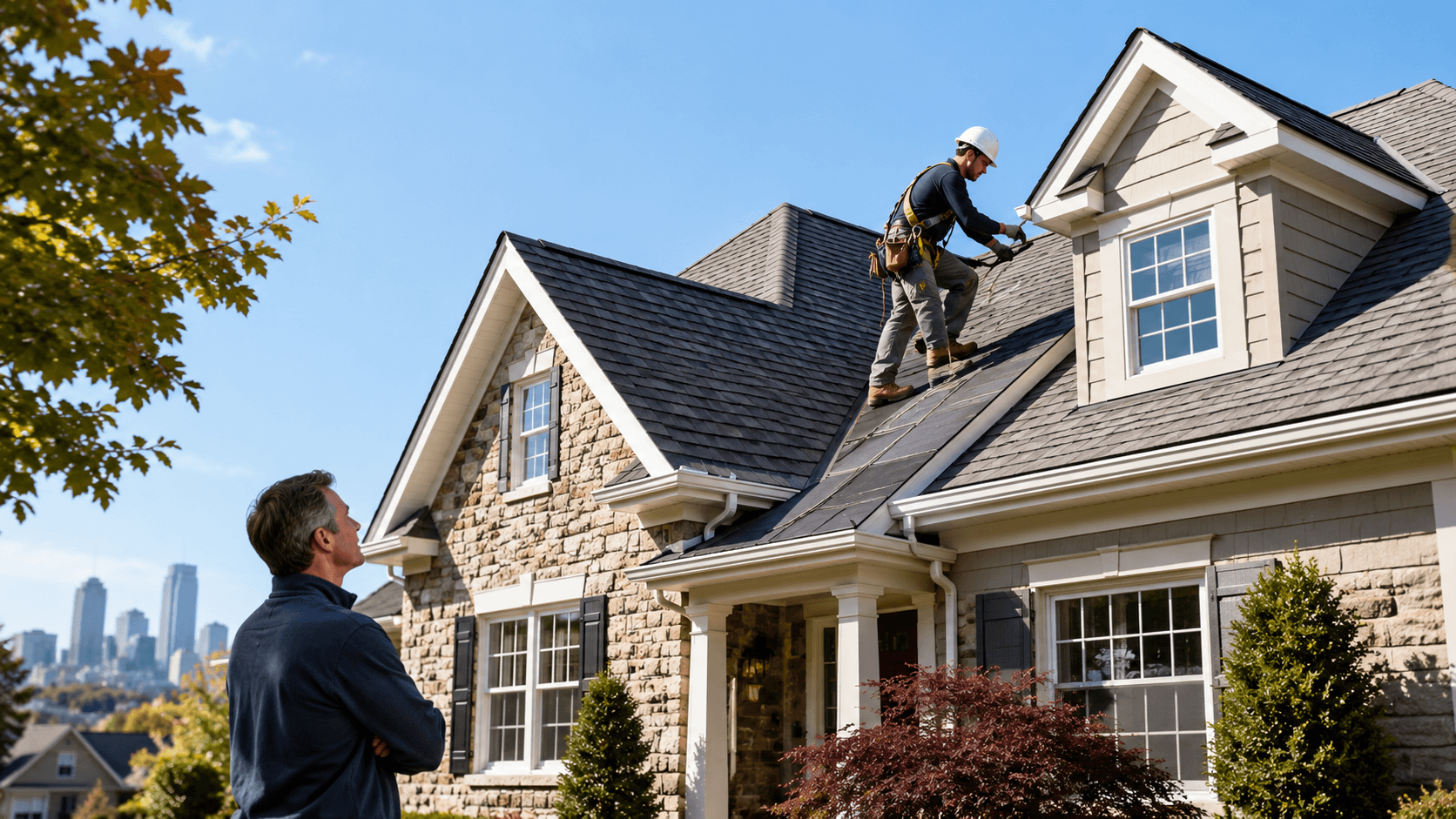
More Than Shingles: The Importance of a Good Roof
When homeowners in Philadelphia, Lower Bucks County, Delaware County, and Montgomery County think about their roofs, shingles are usually the first thing that comes to mind. But your roof is a system that impacts everything from your attic insulation to your home’s structure.
Understanding the importance of a good roof goes beyond aesthetics. It’s about protecting the investment you’ve made in your home. Philadelphia Quality Roofing has been inspecting, repairing, and replacing roofs across the Philadelphia area since 2000. Here’s what we see homeowners get right, and what they consistently miss until it costs them.
TL;DR
A failing roof damages insulation, weakens structural framing, and drives up energy costs. The most common warning signs are missing or curling shingles, granule loss, damaged flashing, sagging decking, and interior water stains.
Key Takeaways
- A well-maintained roof protects your home’s structure, insulation, and interior from water damage
- Most residential roofs last 15–25 years depending on the materials used and local conditions
- Early signs your roof is failing include missing shingles, sagging decking, granule loss, and interior water stains
- Flashing repair is one of the most overlooked maintenance tasks that homeowners delay
- An inspection before problems escalate is the most cost-effective way to extend your roof’s life
What Your Roof Is Protecting
A roof does four jobs at once: it sheds water, regulates temperature, handles structural loads like snow and wind, and keeps conditioned air inside your home.
Water infiltration is the most damaging consequence of a failing roof. Once moisture gets past the shingles and into the decking, it saturates insulation, rots framing, and appears as stains on your interior ceilings and walls. By that point, what might have been a straightforward repair has become a more expensive project.
How Long Does a Roof Last?
How long a roof lasts depends on three things: the types of roofing materials used, the quality of the original installation, and how well the roof has been maintained. Here’s a general breakdown by material:
- Asphalt shingles: 15–25 years
- Flat roofs: 10–15 years
- Fiberglass and specialty systems: 20–30+ years
Roofs that were installed without proper ventilation fail years ahead of schedule. The materials may be fine, but trapped heat and moisture degrade everything from the inside out. That’s why our team is trained and certified in manufacturer specifications.
Signs Your Roof Is Failing
Most roofs don’t fail overnight. They send signals before a problem becomes serious. Knowing what to look for is the difference between a manageable roof repair and a full replacement.
- Missing, curling, or cracked shingles
- Sagging roof deck
- Damaged or missing roof flashing
- Water stains on ceilings or attic walls
When to Replace Your Roof
If your roof is within five years of the end of its expected lifespan and you’re already dealing with recurring issues, replacement makes more sense than repeated repairs.
Some situations where roof replacement is the right call:
- The roof is 20+ years old and has never been replaced
- You’re seeing widespread shingle deterioration
- Multiple leaks are appearing in different areas of the roof
- A roof inspection reveals decking damage beneath the surface
- The roof won’t pass a buyer’s inspection


FAQs
How often should I schedule an inspection if my roof isn’t showing any problems?
We recommend an inspection every 3–5 years for roofs in good condition and annually for any roof 15 years or older. After major storms, it’s also worth having a contractor check for hail damage, lifted flashing, or displaced shingles.
What’s the difference between roof repair and roof replacement, and how do I know which one I need?
Repair addresses isolated damage. Replacement makes more sense when damage is widespread, the roof is approaching the end of its material lifespan, or the decking underneath has been compromised. The best way to know is a professional inspection.
Are certain types of roofing materials better suited for Philadelphia’s climate?
Yes. Philadelphia’s climate puts real stress on roofing systems. Architectural asphalt shingles perform well on sloped roofs and offer strong wind resistance. For flat or low-slope sections, modified bitumen systems are designed for temperature extremes and are well-suited for the area.
What happens if I ignore roof flashing repair?
Flashing failure is the leading cause of roof leaks we diagnose across the Philadelphia area. When flashing around a chimney, vent, or roof valley deteriorates or pulls away from the surface, it creates a direct channel for water to enter the roof system. Left unaddressed, that water saturates the decking, works into the insulation, and eventually reaches interior ceilings and walls. What starts as a minor flashing repair can escalate into decking replacement and interior water damage that costs several times more.
Schedule a Free Estimate with Philadelphia Quality Roofing
If your roof is showing any of the signs above, call Philadelphia Quality Roofing for residential roofing services. We’ve served homeowners across Philadelphia, Lower Bucks County, Lower Montgomery County, and Delaware County since 2000. Contact us today to schedule your inspection.