



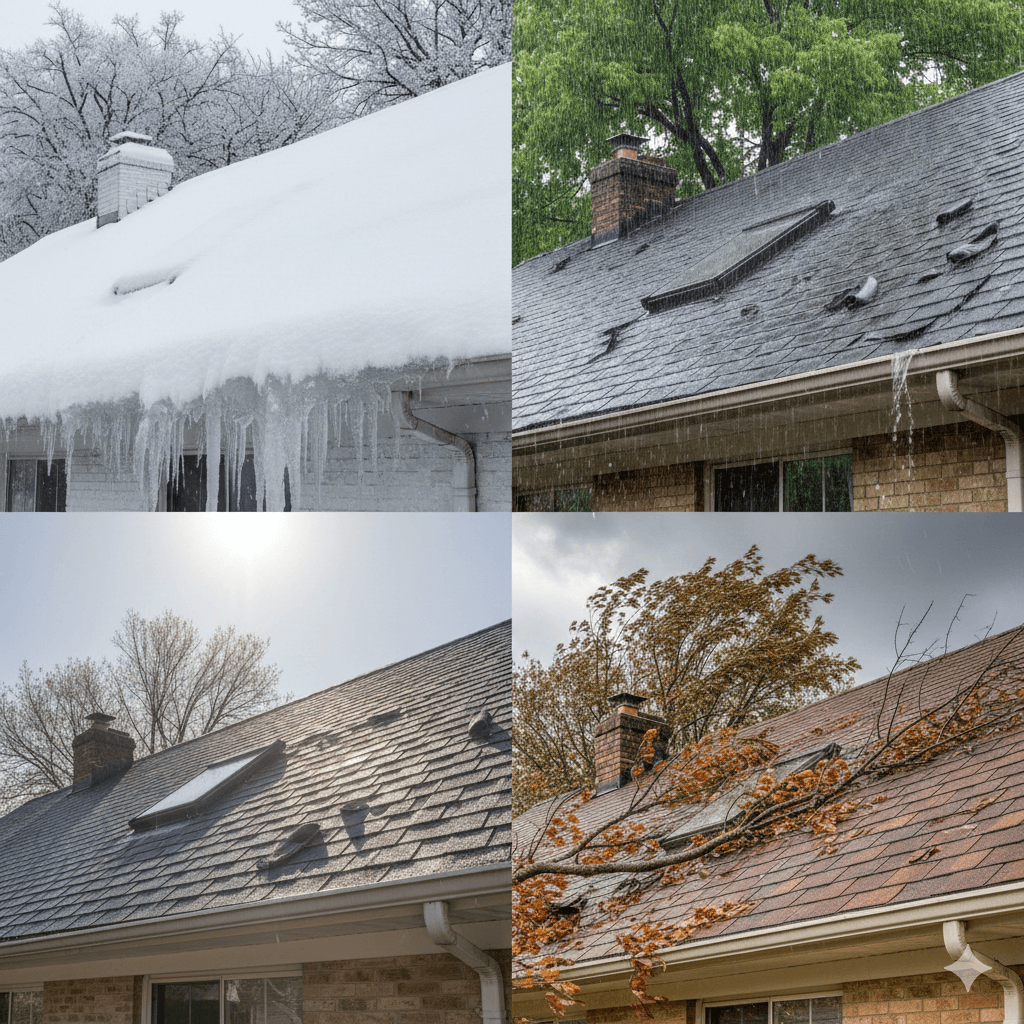
How Seasonal Weather Changes Affect Your Roof
Your roof doesn’t fail all at once. It wears down gradually as it absorbs the impact of Philadelphia’s changing seasons.
From freezing winters and heavy spring rain to summer heat waves and fall storms, seasonal weather patterns place different types of stress on your roofing system throughout the year.
TL;DR
Philadelphia’s changing seasons gradually wear down your roof through temperature swings, moisture, UV exposure, and storms. Regular roof inspections and timely repairs help catch small issues early, prevent leaks, and extend the life of your roofing system.
Key Takeaways
- Seasonal weather causes gradual roof damage, not sudden failure
- Winter freeze-thaw cycles and ice dams often lead to hidden leaks
- Spring and fall are ideal times for a professional roof inspection
Winter: Freezing Temperatures, Ice, and Structural Stress
Philadelphia winters are tough on roofs. Freezing temperatures cause roofing materials to contract, making shingles brittle and more prone to cracking or breaking.
Common Roof Winter Issues
- Ice dams forming along roof edges
- Cracked or lifted shingles
- Moisture trapped beneath roofing materials
- Stress from snow accumulation
Ice dams are particularly damaging. When melting snow refreezes at the roof edge, water can back up under shingles and seep into the structure. This often leads to interior leaks that aren’t visible until significant damage has already occurred.
A professional roof inspection after winter helps identify hidden issues before spring rain makes them worse.
Spring: Rain, Moisture, and Hidden Leaks
Spring brings warmer temperatures, but also heavy rain, melting snow runoff, and lingering moisture from winter damage.
This is the season when many homeowners discover problems that began months earlier.
What Spring Weather Exposes
- Small cracks caused by winter freeze-thaw cycles
- Loose flashing around chimneys and vents
- Clogged gutters causing water backup
- Slow-developing roof leaks
Roof leak repair is especially common in spring because water follows the path of least resistance. Even minor vulnerabilities can allow moisture to enter insulation, decking, and interior ceilings.
Addressing issues early in the spring helps prevent mold growth and structural weakening.
Summer: Heat, UV Exposure, and Material Breakdown
Summer heat is often underestimated when it comes to roof damage. Prolonged sun exposure and high temperatures cause roofing materials to age faster than expected.
Summer-Related Roof Stress
- Shingle warping or curling
- Drying and cracking of sealants
- Accelerated aging from UV radiation
- Expansion of roofing materials
Philadelphia heat waves can push roof surface temperatures well above the air temperature. Over time, this thermal stress weakens shingles and underlayment, making the roof more vulnerable when storms arrive.
This is also when preventative roof repair can extend the lifespan of your roofing system and delay the need for full replacement.
Fall: Wind, Debris, and Storm Preparation
Fall is a transitional season, and one of the most important times to prepare for winter.
Fall Roofing Challenges
- Falling leaves clogging gutters and valleys
- High winds loosening shingles
- Storm systems bringing heavy rain
- Tree debris causing impact damage
Storm damage roof repair often starts with unnoticed issues like lifted shingles or compromised flashing. When winter arrives, those vulnerabilities can quickly escalate.
Fall roof inspections are critical for identifying weak points before snow and ice add additional stress.
Storm Damage Can Happen Any Time of Year
Severe weather doesn’t follow a calendar. Philadelphia experiences thunderstorms, high winds, hail, and occasional hurricanes or tropical storm remnants.
Signs of Storm Damage
- Missing or displaced shingles
- Granule loss in gutters
- Leaks after heavy rain
- Visible impact marks or punctures
Storm damage roof repair should never be delayed. Even if damage appears minor, water intrusion can spread quickly beneath the surface.
Experienced roofing professionals know how to assess both visible and hidden damage, ensuring repairs address the root cause, not just the symptoms.
Why Regular Roof Inspections Matter
Seasonal damage is cumulative. Each weather event compounds the effects of the last.
A professional roof inspection:
- Identifies early-stage problems
- Prevents unexpected leaks
- Extends the life of your roof
- Protects your home’s structure and value
For homeowners, inspections are especially valuable after winter and major storms.
Choosing the Right Roofing Partner Matters
Seasonal roofing challenges require local knowledge, technical expertise, and consistent craftsmanship.
As a family-owned and trusted roofing company, Philadelphia Quality Roofing understands how regional weather affects different roofing systems. Their approach combines specialized expertise with hands-on craftsmanship, ensuring repairs are done correctly the first time.
Homeowners benefit from:
- Customer-focused service and honest assessments
- Comprehensive warranties for long-term peace of mind
- Solutions tailored to Philadelphia’s climate
Protecting Your Roof Year-Round
Your roof is your home’s first line of defense against the elements. Seasonal weather changes are unavoidable but major damage isn’t.
By staying proactive with inspections, addressing minor issues early, and working with experienced professionals. Homeowners can significantly reduce repair costs and avoid emergency situations.
If your roof has been through a harsh winter, intense summer heat, or recent storms, now is the right time to take action before small problems turn into expensive ones.
FAQs
How often should I have my roof inspected?
Most homeowners should schedule a professional roof inspection at least once a year, with additional inspections after major storms or harsh winters. In Philadelphia, inspections in spring or fall are especially effective for catching seasonal damage early.
Can seasonal weather really cause roof leaks?
Yes. Temperature changes, heavy rain, snow, and ice can all weaken roofing materials over time. Many roof leak repair jobs stem from small seasonal issues that went unnoticed until water found its way inside.
What are the most common signs of seasonal roof damage?
Warning signs include missing or curling shingles, water stains on ceilings, clogged gutters, and leaks after storms. Any of these indicate it’s time for a professional assessment.
Is storm damage always visible right away?
Not always. Some storm damage roof repair issues involve lifted shingles, compromised flashing, or small punctures that aren’t obvious from the ground. A trained roofer can identify damage that homeowners often miss.
Schedule Your Roof Inspection Today!
Seasonal wear doesn’t wait, and neither should you. If your roof has been through a harsh winter or recent storms, it’s time to take action.
Philadelphia Quality Roofing is a trusted, family-owned company offering expert roof inspections and long-lasting solutions backed by comprehensive warranties.
Contact us today to schedule your roof inspection and protect your home throughout the season.