



How Different Roofing Materials Handle Spring in Philadelphia
From March through May, homeowners across Philadelphia, Lower Bucks County, Montgomery County, and Delaware County deal with freeze-thaw cycles, heavy rain, and wind gusts that put real stress on every roofing system.
At Philadelphia Quality Roofing, we’ve been inspecting and repairing different types of roofs across the region since 2000, and spring consistently brings in our highest volume of service calls. Understanding how different roofing materials handle this season can help you spot signs of roof damage early and avoid a much more expensive repair down the road.
TL;DR
Spring weather tests every roofing system differently. Knowing what to look for on your specific roof type—and catching problems early—is the best way to protect your home this season.
Key Takeaways
- Asphalt shingles are the most prevalent material locally but require seasonal inspections
- Metal roofing offers superior durability but has specific spring maintenance
- Flat roofs are vulnerable to ponding water and drainage issues after rainstorms
- Granule loss, curled shingles, lifted flashing, and interior water stains are signs of roof damage that should never be ignored
Why Spring Weather Is Hard on Every Roof
Philadelphia’s spring climate creates a specific set of conditions that stress roofs in ways that other seasons don’t. Freeze-thaw cycling expands and contracts materials repeatedly, working loose any flashing, sealant, or shingle seal strip that was already weakened going into winter. Heavy spring rainstorms exploit those weak points, and the wind gusts that come with them create uplift forces that test the adhesion of every shingle and seam.
Asphalt Shingles: The Most Common Roof in Our Service Area
The majority of homes we inspect across Philadelphia, Lower Bucks County, and Delaware County have asphalt shingle roofs. They’re the most widely used roofing material in the region because they’re cost-effective, versatile, and straightforward to repair.
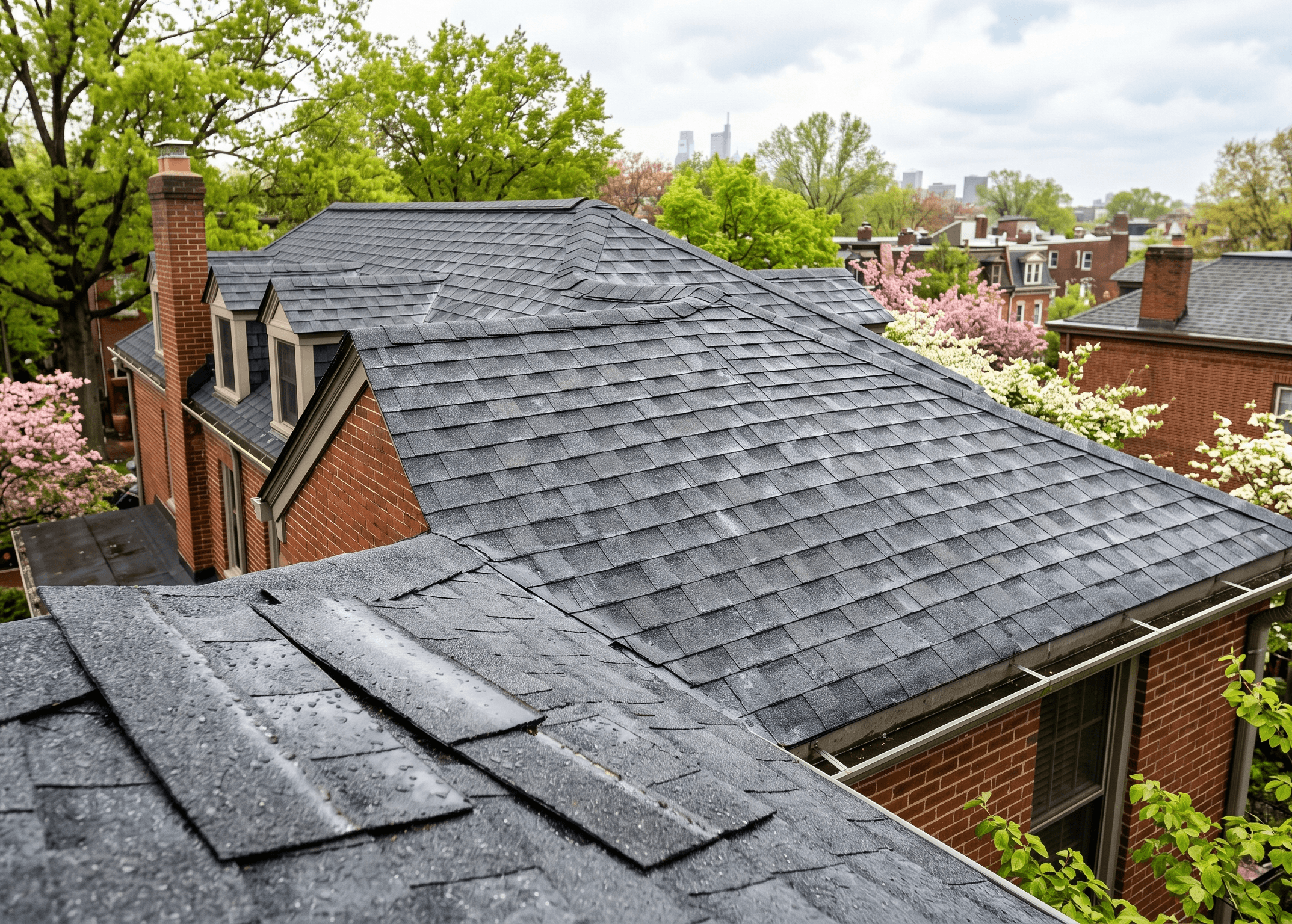
Asphalt shingles are also the material most likely to show visible spring damage. Here’s what typically happens:
- Wind damage to roof shingles is common
- Granule loss accelerates with age
- Freeze-thaw cycling causes shingles to become brittle and crack
Metal Roofs: Strong Against Wind, But Not Maintenance-Free
The asphalt vs. metal roof conversation comes up often in our estimates, and the answer always depends on the homeowner’s priorities. Metal roofing has clear advantages in spring conditions:
- Wind resistance is higher than asphalt
- Metal doesn’t absorb water, so roof damage from rain is less likely
- Metal roofs last 40 to 70 years with proper upkeep
Despite those strengths, metal roofs do have spring-specific vulnerabilities. Fasteners and seams can work loose over winter. On older exposed-fastener panels, degraded washers are a common leak source we find during spring inspections. We also regularly encounter corrosion at cut edges on installations that weren’t sealed to manufacturer specifications.
Flat Roofs and Modified Bitumen Systems
Commercial buildings and many Philadelphia row homes use flat or low-slope roofing systems, including modified bitumen and EPDM membranes. These systems present a different set of challenges than sloped roofs.
The most significant risk is ponding water. Unlike sloped roofs that shed rain immediately, flat roofs rely entirely on drainage systems to move water off the surface. When gutters, scuppers, or interior drains are clogged from winter debris, spring rainstorms leave standing water that stresses the membrane and accelerates deterioration.
Your Spring Roof Maintenance Checklist
Whether your home has asphalt, metal, flat, or a sloped roofing system, this roof maintenance checklist covers what should be reviewed each spring across the Philadelphia area:
- Inspect for cracks, blistering, missing granules, or lifting edges
- Check flashing around chimneys, skylights, vents, and roof valleys for separation or rust
- Clear gutters and downspouts of debris
- Inspect flat roof drains and scuppers for clogs or blockages
- Look for water stains on ceilings, attic moisture, or soft spots in the decking
- Examine fascia and soffits for rot or pest damage
- Document any wind damage or visible storm damage after major weather events
FAQs
How long do roofs last in the Philadelphia area?
It depends on the material and how well the roof is maintained. Asphalt shingles typically last 15–25 years. Metal roofs can last 40–70 years. Modified bitumen flat roofing systems generally last 10–20 years.
What’s the best roofing material for spring weather in our region?
There’s no single best roofing material for every property. For sloped residential roofs, asphalt shingles installed by a certified contractor offer performance and value. Metal roofing is the better investment when longevity and wind resistance are the priority. For flat or low-slope roofs, modified bitumen systems installed per the manufacturer’s specifications perform well.
What are the most common signs of wind damage to roof shingles?
Look for shingles that are lifted at the corners, fully missing, or creased across the middle. You may also notice exposed black substrate where granules have been stripped away, or flashing that’s pulled back from the roof edge. Also, check gutters for an unusual amount of granule buildup.
Is a spring roof inspection necessary if I haven’t noticed any problems?
Most roofing problems aren’t visible from the ground until they’ve already progressed significantly. Catching these issues in spring, before summer heat and fall rain season, almost always results in a simpler and more affordable repair.
Protect Your Roof Before Spring Weather Does Damage
Waiting until a leak shows up inside your home is always the more expensive option. Whether your property has asphalt shingles, a metal roof, a flat membrane system, or a custom deck, Philadelphia Quality Roofing has the certifications, the experience, and the local knowledge to assess it accurately.
Don’t wait for a small issue to become a major repair—contact Philadelphia Quality Roofing today and let’s make sure your roof is ready for whatever spring brings!